What does it look like for Australia to see...
Education as a Tool of Statecraft
Published: February 2026
Synopsis
In a difficult and contested world, we need all tools of statecraft to contribute to Australia’s international aims.
Australia’s education sector – schools, technical education, universities, research and education policy – is a significant national asset which is often overlooked. It is an extraordinary resource to help achieve Australia’s international goals.
Education is a key focus in the battle for the 21st century, with countries throughout the world making efforts to build their education sectors as a competitive edge.
There is a danger of parochialism and Australia seeing education primarily in domestic terms. Conceivable worst-case scenarios – such as a precipitous decline in the sector’s international reputation or the collapse of universities – would severely limit Australia’s ability to pursue its development, defence, diplomacy and trade objectives.
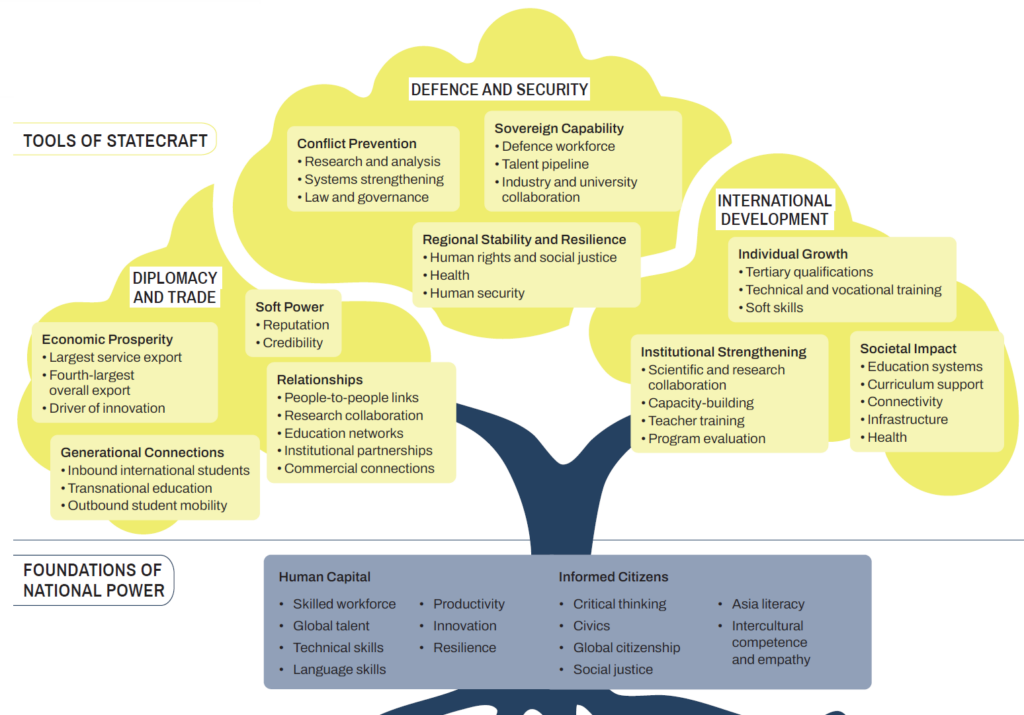
Australia needs to recognise how education contributes across multiple domains. It is a domestic asset that underpins the foundations of national power – in terms of national resilience, productivity and skills – and is a tool for influencing the world outside – through development impact, diplomatic links, trade relations and security.
This paper is the culmination of eight months of consultations with 105 education experts and practitioners from Australia and across the region. This is a synthesis of these contributions.
AP4D is grateful to those who have contributed their thoughts during the development of this paper. Views expressed here cannot be attributed to any individuals or organisations involved in the process.
A full list of individuals and organisations consulted can be found at the end of the paper.
What is Education?
This paper takes a broad view of education, defined here as the systematic development and dissemination of knowledge, skills, values and cultural understanding. It encompasses learning systems of all levels and types – from kindergarten to tertiary study; academic and vocational; and formal and informal – as well as pure and applied research. This paper looks at the way that education underpins Australia’s foreign policy and defence goals including social cohesion, economic prosperity, national security, resilience and global influence.
Why it Matters
Education is elemental and all-encompassing, interlinking with every aspect of Australian society. At a fundamental level, education underpins Australia’s economic growth, prosperity and security by equipping the population with the requisite knowledge and skills to succeed in the 21st century. It likewise instils and reinforces national values and assets such as democracy and multiculturalism.
But the importance of education doesn’t end at the water’s edge.
Education providers contribute to foreign policy goals, shaping positive outcomes at individual, community and country-wide levels. Their work is arguably one of the best tools Australia has at its disposal to support the development of its neighbours and amplify Australia’s global reach.
As a developed country in a developing region, the economic growth and the improvement of living standards of Australia’s neighbours is a national imperative. From this flows social and political stability, better governance, enhanced regional economic opportunity and greater mutual understanding and cooperation. This places Australia’s education sector as a key tool of development cooperation.
Much of Australia’s international engagement is happening through its education sector. International students, transnational education, outbound mobility initiatives, research collaborations, capacity-building and scholarships are key vehicles by which Australians build people-to-people links with citizens of other countries, for example when graduates from Australian institutions rise to positions of power and influence throughout the world, expanding Australia’s economic and diplomatic reach. As a middle power, relationships are vital to Australia’s statecraft, and the education sector is the conduit for this relationship-building.
Australian universities have embraced their role at the forefront of Australia’s global engagement to become highly internationally active. Up until 2024, Australia had the second largest number of international students worldwide – an extraordinary statistic for a country of Australia’s size.
Australia has a remarkable number of universities ranked in the Top 100 globally. These institutions have strong reputations and considerable expertise, attracting talent from around the world both as academic staff and students of great potential.
With the rise of new great powers, shifting ideological conditions and the fragmentation of the multilateral system, Australia is in the process of assessing its role in the world. While Australia can’t compete in terms of military strength or economic might, education is one of its clear comparative advantages. It is also one of the cheapest and most effective forms of soft power.
There has always been, to some extent, a geopolitical motivation behind countries seeking to attract students and researchers to their institutions. But this has taken on new urgency as part of a broader global competition for talent, with states searching for a strategic edge beyond economics. Higher education is increasingly being used as a tool of geopolitical strategy, with governments investing in scholarships, research programs and partnerships that advance national interests. In a complex and competitive world, countries are incentivised to maximise their influence using all tools of statecraft – including key whole-of-nation sectors like education.

“Our commitment to education, training and research exchanges will remain central to Australia’s soft power. These exchanges build influence and strengthen people-to-people links and mutual understanding.”
— Foreign Policy White Paper, 2017
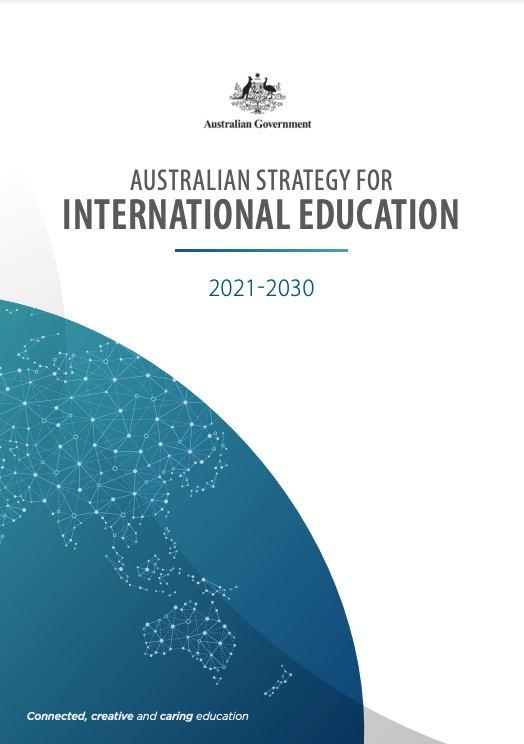
“International education connects Australia with the world, builds meaningful people-to-people links and supports Australia’s position in our region… This helps Australians to prepare for opportunities in an increasingly globalised world and contributes to an inclusive and prosperous Australia.”
– Australian Strategy for International Education 2021–2030

“Australia’s world-class science, innovation, and technical agencies, as well as our tertiary and research institutions, are a valued source of expertise and ideas in our region. We will continue to build our region’s capacity, including through scholarship and training programs that support a diverse array of future leaders.”
“Delivering on National Defence includes ensuring that Australia’s research and innovation sector supports the most pressing defence and security priorities to accelerate the delivery of next generation capabilities.”
– Defence Integrated Investment Program, 2024
“As countries face increasing global competition, many are seizing the opportunity of uncertainty to advance their own position. Attracting – and keeping – top international students and talent is becoming a strategic tool for state competitiveness.” – KPMG Australia Geopolitics Hub
A New Paradigm
“As countries face increasing global competition, many are seizing the opportunity of uncertainty to advance their own position. Attracting – and keeping – top international students and talent is becoming a strategic tool for state competitiveness.”
– KPMG Australia Geopolitics Hub
China
China’s Outline of the Plan for Building China into a Leading Country in Education aims to take China’s education system from ‘big’ to ‘strong’ and continue its drive towards a high-quality, world-leading education system. The focus is on expanding international academic exchanges and educational and research cooperation, including with less developed countries.
India
India’s National Education Policy sets out a vision to transform the country into “a global knowledge superpower,” including through enabling more foreign universities to establish campuses in India and supporting Indian universities to operate abroad.
Japan
The Top Global University Project aims to enhance the international compatibility and competitiveness of higher education in Japan providing prioritised support for top world-class and highly innovative universities that can lead the internationalisation of Japanese universities.
South Korea
The Study Korea 300K Project aims to attract 300,000 international students and position South Korea as a global education powerhouse, including by expanding the Global Korea Scholarship program.
Association of Southeast Asian Nations
The Roadmар on the ASEAN Higher Education Space considers higher education as one of the catalysts in accelerating ASEAN’s economic, political and sociocultural development agenda.
Singapore
Singapore has a longstanding and sustained effort to be a global international education leader. Its ‘global schoolhouse’ vision, outlined by the Ministry of Trade and Industry, focuses on attracting international students and enhancing Singapore’s status as a world-class education hub.
Malaysia
The Malaysia Education Blueprint aims to create a higher education system that ranks among the world’s best, positioning Malaysia to compete in the global economy. It concludes that Malaysia needs to raise the nation’s higher education brand even further to achieve global prominence.
European Union
The European Strategy for Universities recognises the critical role universities play in contributing to EU member states’ societal and economic resilience, as well as the bloc’s broader political agenda.
United Kingdom
The UK’s whole-of-government International Education Strategy aims to increase the value of education exports to £35 billion per year, and to increase the number of international higher education students hosted in the UK to 600,000 per year, both by 2030. This aligns with the 2021 Integrated Review, which framed knowledge, education and the attraction of talent to the UK as key tools in realising the ‘Global Britain’ vision.
Germany
The Bund-Länder Strategy aims to strengthen the internationalisation of higher education by boosting international mobility and expanding global cooperation. It focuses on increasing Germany’s attractiveness to international students and researchers while removing barriers such as high dropout rates, accessibility challenges, and regulatory hurdles.
France
Announced in 2018, Bienvenue en France is an initiative to increase the number of international students in France from 320,000 to 500,000 by 2027 and to boost the visibility of France’s higher education sector worldwide.
Canada
Canada’s International Education Strategy aims to diversify the education sector, boost innovation, promote global ties and foster a vibrant Canadian economy. It focuses on encouraging outward student mobility, diversifying Canada’s international student cohort and supporting Canadian education institutions to expand internationally.
South Africa
The Policy Framework for Internationalisation of Higher Education in South Africa aims to strengthen global engagement, improve the quality and competitiveness of the higher education system and align internationalisation activities with national priorities.
Egypt
The focus of Egypt’s National Strategy for Higher Education and Scientific Research is to foster innovation, sustainability, and international collaboration to help address complex societal challenges and advance Egypt’s Vision 2030 national agenda.
United Arab Emirates
UAE’s National Strategy for Higher Education seeks to provide future generations with the necessary technical and practical skills to drive the economy in both public and private sectors.
Saudi Arabia
Education features prominently in Saudi Arabia’s Vision 2030 strategy to diversify its economy away from dependence on oil exports. The Human Capability Development Program focuses on aligning educational outcomes to the needs of the labour market, fostering innovation and developing and upgrading skills.
Brazil
Brazil’s CAPES-Global.edu aims to foster the creation of cooperation networks between national institutions at various stages of internationalisation. The overarching objective is to strengthen Brazil’s international prominence and consolidate its position as a strategic partner in global initiatives.
A Fragile Asset
Many consultees were concerned about the current state of Australia’s education sector, particularly tertiary education. While consultees differed in where they placed the blame for this situation, there was consensus that the sector is vulnerable.
“Higher education is on fire at the moment. And I do not think government understands the damage that is being done right now. Change is needed.”
“It is surprising, given how important education is to our economy, the political narrative and the negativity. “
“We are absolutely to blame for this. We saw this as a way to make money, not statecraft”.
“Australia has been the envy of the world in its higher education sector. Australia has really undercut itself. The quality of institutions has declined.”
“It’s possible to destroy a sector.”
The following worse case scenarios were discussed:
Poor student experience and loss of reputation
Australia relies on its reputation as a global education provider to attract talent from overseas.
The commodification of international students – treating them as revenue sources rather than learners, risks this reputation.
“I’m concerned that when we talk about education it is as a commodity or export. We need to look at it more as politics.”
“The role of regulator in ensuring the integrity and quality of higher education is critical to the reputation of Australian higher education.”
Blaming international students for housing and cost-of-living crises – which can fuse with anti-immigration rhetoric – further alienates students and can lead to a reluctance by countries and parents to send children to Australia to study.
“Australia used to be highly regarded in higher education as a destination close to Asia.”
“Anti-immigration and far-right rhetoric put Australia’s higher education sector at a disadvantage as an unfriendly, regressive country.”
The quality of student experience is crucial. Poor experiences, like bias or discrimination, will be remembered. Visa requirements can significantly shape the experience and wellbeing of international students – as can high living expenses. Taken together, these factors can affect academic performance and students’ ability to fully engage in campus life.
“They come because they are sold on the Australian dream… and we’re not delivering on that.”
All these factors can influence prospective students’ decisions about whether to study or remain after graduation, ultimately impacting Australia’s ability to attract and retain global talent – which is no small matter for a country that relies on migration for economic growth. Consultees stated that trust can be eroded very quickly and, once lost, can take a long time to rebuild – particularly when safety becomes an issue.
“To build a nation you do need talent. Australia doesn’t have the people… I actually feel sorry for Australia that Australia loses out, because people have lots of options.”
“If Australia is not careful in managing it, we may follow the US.”
Recent polling by prominent science journal Nature found that 75% of researchers in the United States have considered leaving the country amid severe funding disruptions, cancelled grants and uncertainty about the future of their labs or graduate-student funding. For many, this instability has changed their outlook on doing science in the United States and they are now actively looking for positions elsewhere in the world.
The consequences extend far beyond individual researchers. The uprooting of talent threatens to erode long-standing scientific infrastructure, diminish the capacity for innovation and lead to a “brain drain.”
Decline in Indian student enrolments
In 2009, more than 70,000 Indian students were studying in Australia. This made up 19% of all international enrolments and contributed significantly to Australia’s $13 billion international education industry.
In 2010, following a widely-reported series of attacks on students in Melbourne and Sydney, which included the murder of an Indian student, interest from Indian students in studying in Australian dropped sharply. The negative publicity was compounded by concerns over unethical practices by some private colleges and migration agents, and by the high Australian dollar compared with the UK pound sterling and the US dollar, contributing to a perfect storm of events that resulted in a 56% decline in Indian student enrolments between 2009 and 2012.
After the 2009 reduction, revenue from Indian students did not return to the trend growth level until 2016. This drop in Indian student numbers represented a nearly $1.3 billion reduction in revenue.
University crises and collapses
Many leading Australian universities derive a considerable share of their revenue from international students. For example, the Group of Eight (Go8) institutions are particularly reliant on international student fees, with foreign enrolments making up 47% of the total cohort at the University of Sydney and more than 35% at the University of Melbourne, the Australian National University, the University of Queensland and the University of Adelaide.
A significant reduction in international enrolments – be it through protracted reputational damage, student visa caps or a global disruption like COVID-19 – would have devastating impacts on the tertiary education sector, with some universities unable to survive. Domestic Australian student places that are subsidised by international fees would also be adversely affected.
Some consultees expressed concerns that regional campuses would be the hardest hit. Universities would be forced to merge or amalgamate, with smaller and regional institutions subsumed by larger universities, potentially creating education deserts in regional Australia. A struggling university sector domestically would have a negative impact on Australia’s reputation as a global education leader.
“The worry is that the big will get bigger, the smaller won’t survive and the others will close down their regional campuses.”
Even if universities as overall institutions survive, there is a risk that disciplines that are not viewed as strategic might be cut. For example, social science and humanities are precisely the kind of education and research expertise that Australia needs in its statecraft and yet they are under existential threat.
“It is obvious that the sector is in great distress. Around a third of Australian universities are cutting Arts, Social Sciences and Humanities disciplines.”
“In social sciences and humanities, it feels like a constant assault in all directions on our right to exist.”
“You’re cutting off blood supply to critical elements.”
Universities across the United Kingdom are deeply reliant on international students. The total income of UK higher education providers in 2022/23 was about £50 billion (compared to just under £20 billion in Australia). Of this, some 52% came from tuition fees (43% of which were paid by international students).
Universities argue that foreign students provide a crucial source of revenue, and that it’s good to attract talent from around the world. Critics complain that education is used as a back door to economic migration; at least a third of foreign students settle in Britain, notably those from India, China and Nigeria. Rules designed to reduce this, for example, by banning most postgraduate students from bringing family members to live with them, have meant that student visa applications dropped by 16% last year. This has greatly affected university finances.
More than 90 UK universities have announced staff redundancies, course closures and other forms of restructuring. Others may be forced into mergers or axing some degrees. Some may go bankrupt, and either have to be bailed out financially by the government, or close down.
The Contribution of Education
Foundations of National Power
Consultations showed a consensus that the human capital of Australia’s population is one of the bases of its national power. A highly sophisticated education system (pre-school through tertiary) and research ecosystem are both important national assets.
International students who are attracted to stay in Australia as skilled migrants have been transformative to Australian society.
“It has directly shaped the composition of Australia in recent decades.”
At school level, consultees were passionate about their role in fostering an active and informed citizenry with key skills including critical thinking.
“An informed and educated citizenry is vital for nation-building.”
“Primary and secondary education is about genuine and holistic formation of young people.”
“We’re trying to nurture the global citizen.”
“I think schools are the unsung heroes [in international education]. They don’t get any credit for the work they are doing.”
Consultees nonetheless acknowledged that gaps continue to exist in curricula, particularly around Australia’s democratic values and traditions such as the electoral system and constitution. As well as providing domestic benefits, increased public knowledge of and proficiency in these types of civic education also strengthen Australia’s outwards-facing engagement.
Many stressed that regional literacy should be better embedded in the schooling curriculum to help every Australian to know the vast and diverse region they live in. The opportunity for more focus on international development and civics was also identified as a way of building good global citizens, not just good local citizens.
“It’s imperative that [regional literacy] is included in curriculum so that every Australian understands.”
“When you think of a Venn diagram of education and development — the space in between needs to be explored.”
Tertiary and technical education was likewise seen as a national asset, central to Australia’s prosperity and global standing. It can instil and reinforce critical thinking skills, language skills and the capacity to engage in national dialogue. It is the base for technology, innovation and entrepreneurship.
Consultees emphasised that higher education is fundamentally about building human capital and advancing research as a social good. They highlighted the transformative impact of education not only on Australian society, but in contributing to Australia’s international objectives and regional development priorities in a world of rapid geopolitical change.
“Universities make an absolutely critical contribution. It’s a contribution that is deep, it’s wide, it’s multifaceted, it crosses spatial and temporal boundaries. It brings material and ideational relevance.”
“I think universities are vital national assets through their research expertise and their talent pipeline.”
“We’re a training ground for people to go out into the world and represent Australia.”
Vocational and technical training should be recognised as an asset. Public institutions such as TAFEs – Australia’s only national training system – are quality assured organisations that provide training and higher education to large numbers of students, both Australian and international.
“One of the constant challenges we have in vocational and technical education is the problem of esteem, how it is perceived compared to higher education.”
Caritas Australia works with Catholic schools across the country to help educate children and young people about global development challenges. They have developed a range of K-12 teaching resources to enable students to see, learn and act for justice, as well as professional development material for teachers.
Global Education Resources for Classrooms
In November 2025 the Department of Foreign Affairs and Trade released curriculum-aligned lesson plans for Years 3-10 to help students explore what it means to be a solutions-focused global citizen, motivated by values of equity, sustainability and cooperation. Each module builds knowledge of the Asia-Pacific region and includes a call to action that lets students step into real-life simulations promoting sustainable development and regional partnerships.
The years 3-4 lesson plans focus on thinking critically about what it means to be part of a diverse global community, students create a hypothetical partnership project.
In years 7-8 students explore regional connections between Australia and the Pacific as they plan development strategies to help address climate change.
In years 9-10 students explore contemporary global issues and cooperative practices as they plan a sustainable future as global citizens.
A standalone year 10 lesson asks students to consider sustainable development projects to present on the links between gender equality and prosperity, peace and social cohesion.
In partnership with state and territory governments, the federal government has established TAFE Centres of Excellence to help deliver a skilled workforce for strategically important industries to meet national challenges.
These include centres focused on:
- battery to grid, battery installation and battery storage and maintenance training
- transitioning traditional mining, energy and manufacturing industries to cleaner, renewable energy sources
- clean energy science, engineering, construction and operation
The New Colombo Plan (NCP) is an Australian Government initiative that provides opportunities for Australian undergraduate university students to develop their Indo-Pacific capability and Asia literacy through immersive, structured learning and internships in the Indo-Pacific region.
The program fosters deeper people-to-people and education relationships, and increases Australia’s economic engagement with the region by supporting NCP alumni to maintain their ties to the Indo-Pacific.
A Tool for Development
Education and research contribute to positive development outcomes.
Education and skills have long been an area of focus within Australia’s development program.
“Education aid is the easiest sell in the world. It’s effective. You can increase lifetime development outcomes for a kid. That’s where the highest return on investment is.”
Consultees spoke about how valued Australia is as a provider of access to quality education at both school and tertiary level. As well as international education (where students travel to Australia to study), some Australian universities offer transnational education (provided to students in their home countries).
“The impact of the Australia Awards and all those things, they’re very real.”
“Transnational education isn’t extractive. It takes the intellectual property of Australia to give the best education to other countries.”
“Transnational education is the sector’s and the whole country’s blind spot.”
Australia is also a valued source for other countries’ education systems, including teaching training, teacher standards and curriculum. One consultee gave the example of Vietnam undertaking a global scan of schooling systems to look for a model and selecting Australia.
“In terms of soft diplomacy I can’t think of a bigger opportunity than working with [countries in the region] collaboratively to build better education systems.”
Research also plays an important role in development. Some consulted were proud of their role in taking knowledge generated in Australian education institutions and applying it in the region and globally. Others focused on two-way learning with international partners.
“Australia should see research as a tool of statecraft. The research questions that governments prioritise investment in are often ones that are felt around the world and there are opportunities to find solutions to shared problems and a deeper understanding of shared humanity.”
“We aim to have every single research grant we have building regional capacity in some way.”
Research also plays an important role in learning from development practice, with researchers continually reevaluating and refining programs to find what works best. In developing countries where lack of quality data is a problem for policy, partnerships with universities in Australia for in-country research can be very valuable.
Some Australian universities work directly as providers of development programs. Consultees gave many examples of university partnerships that have a direct impact on development.
Australia Awards Scholarship Program
The Australia Awards scholarship program, managed by the Department of Foreign Affairs and Trade, provides opportunities for people from developing countries to undertake full-time undergraduate or postgraduate study at participating Australian universities and Technical and Further Education institutions.
Australia Awards not only develop skills and knowledge of individuals but also strengthen links between people and organisations to enhance mutual understanding and cooperation. Recipients of Australia Awards become part of the Australia Global Alumni, further strengthening connections between Australia and the region.
Australia Pacific Training Coalition
The Australia Pacific Training Coalition (APTC) is Australia’s largest Technical and Vocational Education and Training program in the Pacific & Timor-Leste. It is focused on supporting inclusive skills development and ensuring training meets the needs of national and regional labour markets. It strengthens Australia’s soft power by building human capital, deepening people-to-people links, and fostering long-term goodwill and trust across the Pacific through high-quality training.
APTC was established in 2007 and concluded in March 2025, transitioning to its next phase, Pacific Australia Skills. Over its lifespan APTC went through a number of iterations and was most recently implemented by TAFE Queensland.
Australian Centre for Education
The Australian Centre for Education in Cambodia provides English language training and testing to over 14,000 students per term from young learners aged 8 and upwards to government employees, embassy staff and corporate executives.
The Knowledge Partnership Platform Australia-Indonesia (KONEKSI)
KONEKSI is Australia’s flagship knowledge program in Indonesia that supports better use of knowledge-based solutions for inclusive and sustainable policies and technologies.
KONEKSI supports the development of knowledge relevant to both countries and that contributes to Indonesia’s economic transition from a resource-based to a knowledge-based economy. It supports the development of partnerships between Australian and Indonesian organisations to carry out and disseminate high-quality, multidisciplinary applied research on complex socio-economic problems that reflect priorities of mutual interest. The research themes are agreed jointly between Australia and Indonesia, taking into account mutual priorities and Indonesia’s long- and medium-term development priorities.
Education Analytics, Research and Capability Building Program
The Education Analytics, Research and Capability Building (EdARC) program is managed by the Australian Council for Educational Research on behalf of the Department of Foreign Affairs and Trade. It is designed to improve the quality of evidence and expertise used to inform education policies and programs in the Asia-Pacific region.
It includes a rapid response, a research-based helpdesk and a broad strategic stream of work. EdARC also provides capability building opportunities for DFAT staff and partners occur through on-demand training and enables two-way learning between Australia and its regional partners.
Australian Centre for International Agricultural Research
The Australian Centre for International Agricultural Research (ACIAR) is a key player in Australian international statecraft. By advancing food security, climate resilience and sustainable agricultural systems through collaborative research partnerships across the Indo-Pacific, ACIAR builds partnerships that promote Australia as a trusted and capable development partner, strengthening diplomatic relationships through science cooperation, knowledge exchange and capacity building. ACIAR co-designs research with partner governments, universities and local institutions, creating enduring networks of researchers, experts and policymakers who understand and value Australia as constructive partner. This in turn reinforces soft power, regional influence and good will.
One example of this is the IndoBeef program, a collaborative effort involving the Indonesian Agency for Agricultural Research and Development and ACIAR and University of New England, among others. The IndoBeef program aims to significantly improve beef production and the livelihoods of smallholders and other beef market chain participants in 5 provinces of Indonesia. IndoBeef is a key component of University of New England’s Indonesian research initiative, which involves establishing links with Indonesian universities that have a strong focus on agriculture, and providing opportunities for Indonesian students to complete higher degree research.
Educating The Future is a grassroots not-for-profit that raises funds for the construction of preschool infrastructure in regional and in-need areas of Timor-Leste as well as the facilitation of in-country partnerships and capacity building. It was founded in 2016 by two Australians who travelled to Timor- Leste as part of a school immersion program, and has since raised close to $400,000 and engaged over 200 volunteers. In 2022 Educating The Future established the Timor-Leste- Australian Youth Dialogue program to build mutual cultural understanding between Australian and Timorese youth.
The International Science Council
The International Science Council is an international NGO with a mission to act as the global voice for science to promote science as a global public good. Its Asia–Pacific team, hosted at the Australian Academy of Science, plays a key role in bringing scientific collaboration and capability-building to the region. The Department of Industry, Science and Resources is the principal funder and primary policy counterpart.
One initiative has been a mentoring program linking Pacific researchers with Australian counterparts. This platform builds scientific careers, deepens research collaboration, and strengthens regional research capacity. Its success prompted the development of an Asia-focused stream. In 2023, the team also helped establish the Pacific Academy, an important step for a region where scientific institutions are young and research ecosystems are still developing.
The World Mosquito Program is a not-for-profit initiative led by Monash University, redefining the fight against mosquito-borne diseases like dengue, Zika, chikungunya and yellow fever. It is an evidence-based, safe, one-time intervention that works by introducing the naturally occurring and extremely common bacteria Wolbachia into Aedes aegypti mosquitoes. This innovative, sustainable solution disrupts disease transmission while empowering communities to take ownership of their public health. Collaborating with Action on Poverty, this method is currently being expanded across Vietnam and Timor-Leste.
A Tool for Diplomacy and Trade
Education and research contribute to diplomacy and trade. Consultees stressed that the education sector is a significant contributor to Australia’s economy.
“The mining sector doesn’t employ many people. The four universities in Western Australia are probably employing more.”
But beyond the economic gain, education is a diplomatic asset by influencing future policymakers with Australian perspectives on issues and positioning Australia as a partner of choice.
“I see the people who study at Australian universities. They go back to their home countries with fond memories. This is an amazing asset ― and Australia can’t get it any other way.”
“I do hope we recognise the ongoing importance of international students in connecting Australia to the world.”
“International education should move beyond transactional logics of scholarships and skills. Instead, it should be understood as a shared social process through which cooperation and trust are cultivated. Education mobility, in this sense, humanises foreign policy: it embeds collaboration, empathy, and exchange as enduring features of Australia’s engagement with its regional partners.”
In some contexts, Australian education institutions play diplomatic functions, complementing official diplomacy.
Business- and industry-based education programs can build relationships of trust that lead to long-term trade links.
Monash University Blue Zone Pavilion – COP 28
At the 2023 COP28 in Dubai, Monash was the first and only university from the Indo-Pacific to host a pavilion in the Blue Zone, an exclusive UN Badge only area. The pavilion focussed on five thematic priorities: Just Energy Transition, Climate Health, Indigenous Wisdom, Education & Youth, and Antarctica and Oceans.
Almost 10,000 people from 165 countries visited the pavilion, including 12 Ministers and Ambassadors. The pavilion hosted 230 event partners across 68 sessions with more than 200 speakers. Events included panels, workshops, networking events, fireside chats, and displays of creative practices.
This diverse global engagement provides a great example of Australia’s soft diplomacy and opportunity to deepen partnerships to influence global players in climate action.
Professional Placements Program
The Professional Placements program is an initiative funded through DFAT under the umbrella of Invested: Australia’s Southeast Asia Economic Strategy to 2040 and implemented by Strategic Development Group.
It aims to strengthen business-to-business engagement between Australia and Southeast Asian countries by enabling temporary work placements of early- to midcareer professionals between Australia and eligible Southeast Asian countries in three priority sectors: finance investment, energy and digital economy.
By facilitating tailored short-term placements, the program seeks to build cross-cultural skills, enhance networks, foster collaboration, and open new trade or investment opportunities — benefiting both sending and hosting businesses.
The Australian National University’s North American Liaison Office
The Australian National University, as the only federally legislated university, has established a North America Liaison Office within the Australian Embassy in Washington DC.
Funded by ANU, NALO has a remit to represent ‘team Australia,’ working closely with the embassy to strengthen partnerships with universities, government, think-tanks, industry and alumni communities in North America.
Collaboration with leading North American researchers boosts the quality and impact of ANU research and creates unique opportunities for ANU students to become future leaders.
In 2025 RMIT university celebrated 25 years in Vietnam. Growing from an initial cohort of 40 students in 2000, the University now serves over 12,000 students at campuses in Ho Chi Minh City, Hanoi and Danang, boasting an alumni network of more than 20,000.
RMIT also works with government and industry to support Australia’s bilateral and regional priorities. The RMIT Asia Hub, launched in Melbourne in 2022, is a partnered program with global think tank Asia Society Australia that aims to build Australia’s Asia Intelligence by pioneering new approaches to understanding and engaging with Asia.
RMIT also co-launched the Australia Vietnam Policy Institute (AVPI) in 2022. Supported by the Australian Department of Foreign Affairs and Trade and a network of more than 38 Knowledge partners across industry, government and academia, AVPI is a bilateral initiative focused on building the Australia-Vietnam partnership. It convenes dialogue, facilitates knowledge sharing and advocates for policy interventions to support Vietnam’s economic development and grow two-way strategic and commercial connections.
A Tool for Defence and Security
Education makes a strong contribution to Australia’s defence and security.
Most obviously, education is key to the defence workforce, both at a foundation level and in expanding the pool of people with specialist industry skills. In areas such as health security, research and international partnerships are crucial.
“If we’re talking about securing Australia, about national resilience… research and development is central to that.”
“It’s a no-brainer that universities are fundamentally important to foreign policy, strategic policy, diplomacy and security.”
More broadly, education has a positive impact on peace and stability by fostering more peaceful societies and creating economic growth opportunities. For example, countries with higher average primary school completion rates rate higher on indicators of peace.
“When you think about contributing to regional stability and security development, Australia’s universities have played a major role in uplifting the region.”
“Any whole-of-nation approach to regional security, economic resilience and diplomacy and development should include education.”
UK-Australia Advanced Skills Alliance
In December 2025 a group of Australian and UK universities signed an agreement to accelerate the skills and research needed to build security, defence and resilience capability as part of the UK-Australia Geelong Treaty and to support delivery of the AUKUS innovation program.
One key initiative is the creation of a joint UK-Australia Centre for Doctoral Training focusing on security, defence and resilience. Students will spend up to 12 months in the partner country to share expertise and build lasting ties between the nations’ defence and security sectors.
The Alliance will also educate and train the broader workforce, including specialised short courses, micro-credentials and other programs.
One of the inaugural national priorities of The National Skills Agreement is developing Australia’s sovereign industrial capability.
Other examples include a Schools Pathways Program, Defence Industry Pathways Program, Defence Industry Internship Program and Engineering is Elementary Program.
Defence Industry Skills Centre of Excellence
The Defence Industry Skills Centre of Excellence represents a major strategic investment in Australia’s defence workforce directly supporting sovereign capability, longterm national security and economic opportunity. It is led by South Metropolitan TAFE through a joint investment by the Australian and Western Australian Governments as part of the national skills agenda to build workforce capacity for a rapidly expanding defence industry in WA.
This initiative responds to major upcoming defence projects including naval shipbuilding, sustainment of nuclear-powered submarines and maintenance work which are projected to create thousands of skilled, well-paid jobs over the coming decades.
The Australian Hypersonic Research Precinct at Eagle Farm
In 2022 the Prime Minister opened an Australian Hypersonic Research Precinct at Eagle Farm in Brisbane. The state-of-the-art facility houses more than 60 staff and supports collaboration between Defence, industry, universities and international partners to advance the development of hypersonic technology. This builds on groundbreaking work undertaken by the University of Queensland on hypersonics since 2002 in partnership with the Defence Science and Technology Group.
The Oceania Cyber Security Centre
Based in Melbourne, the Oceania Cyber Security Centre (OCSC) is a not-for-profit cybersecurity assessment, evaluation and research organisation that conducts evidence-based cybersecurity capacity building in the Indo-Pacific. Jointly owned by eight Victorian Universities, the OCSC is focused on building regional capabilities through a mix of national cybersecurity capacity assessments, independent evaluations, localised research, and educational programs.
At the invitation of governments, OCSC conducts multistakeholder national cybersecurity capacity assessments to help partner nations understand where they stand and identify their own priorities for next steps, while providing specific recommendations for national policies, strategies, and activities to strengthen capacity and resilience.
The Indo-Pacific Centre for Health Security
The Indo-Pacific Health Security Initiative was created within DFAT in 2018 to strengthen health systems and invest in research and partnerships to mitigate the social and economic risks of a major disease outbreak. Establishment of this initiative meant that infrastructure was in place to help support timely, equitable access to COVID-19 vaccines for partner countries in the Indo-Pacific region. More than 50,000,000 doses of the COVID-19 vaccine were shared with partner countries by May 2023.
Consensus on Education as a Tool of Statecraft
There was a clear appreciation among those consulted on the value of education as a tool of Australian statecraft. This goes beyond the fundamental point of the contribution of education to building the sovereign skills, capabilities and knowledge of Australians to an awareness that education supports defence, diplomacy, development and trade.
“I very much believe education is a tool of statecraft.”
“If you’re not using education for your statecraft, you’re missing something.”
“I think policymakers talk about education as a tool of statecraft, often grounding that in the experience of the Colombo Plan. The New Colombo Plan sought to build on that.”
“There’s a lot of potential. We have built one of the most internationalised university systems in the world and that’s great for Australia.”
“When we think about the next 10- 20 years in our region, and the role of Australia… the rise of China, and the rise of partners and the fragmentation of the multilateral system. What is Australia’s unique selling point? We can’t compete on cash, so we’ve got to compete with other unique selling points.”
Consultees considered that education should be a central pillar of how Australia engages with the world. Many saw Australia as having an ethical and moral responsibility to support sustainable development in the region by helping to build capacity. The self-interest case for leveraging education as a tool of statecraft follows on from this, with Australia’s own security and prosperity intrinsically tied to that of the region.
“Australia needs the region to be prosperous and wealthy.”
“We’re starting to understand that education is fundamental to the stability and safety of the region.”
“The interesting thing about education is that while other things will be seen as instrumental, education won’t be. There’s self-interest but it’s broader.”
“It’s just an enormous, missed opportunity. We’re world class at education. And in the region, that’s what people want more than anything.”
“How do you convince parts of government that universities are worth protecting? It’s not just universities; it’s all the things we teach at universities.”
“Universities contribute not just to security, also reputation across the world that we are a peaceful, progressive nation that just wants others to progress as well.”
Part of this is renewing a shared understanding that the education sector exists for the public good.
“We need to get back to the idea of universities as a public good – domestically and globally.”
“TAFEs are public training providers, owned by state governments.”
“Investing in the education sector is… not just about economic returns. It actually comes back to the very core of Australia’s international intent and regional intent around regional stability, cohesion and partnerships. Without education, we actually can’t achieve that.”
“This is such an important resource for Australia. Higher education has gone from strength to strength until now. We’re losing jobs. There’s no way this is good for Australia.”
Education collaborations and initiatives are already evident in Australia’s engagement with the region. For example, there are hundreds of researchers and academics from across Australia’s higher education sector working on programs that directly improve the living standards of vulnerable populations in the region. While many of these experts would frame what they’re doing as research within their discipline, it nonetheless has a real impact in the communities they’re working in, even if it isn’t always captured under the “development” banner.
“Australia’s engagement with the world is happening through the education sector.”
“Australia has an outsized impact in the region in terms of its research collaborations, uplifting the scientific capacity of other countries and their ecosystems.”
“There are many more people doing research in universities that are relevant to development than you would imagine.”
“The examples and effort are there. It’s just that it’s not joined up.”
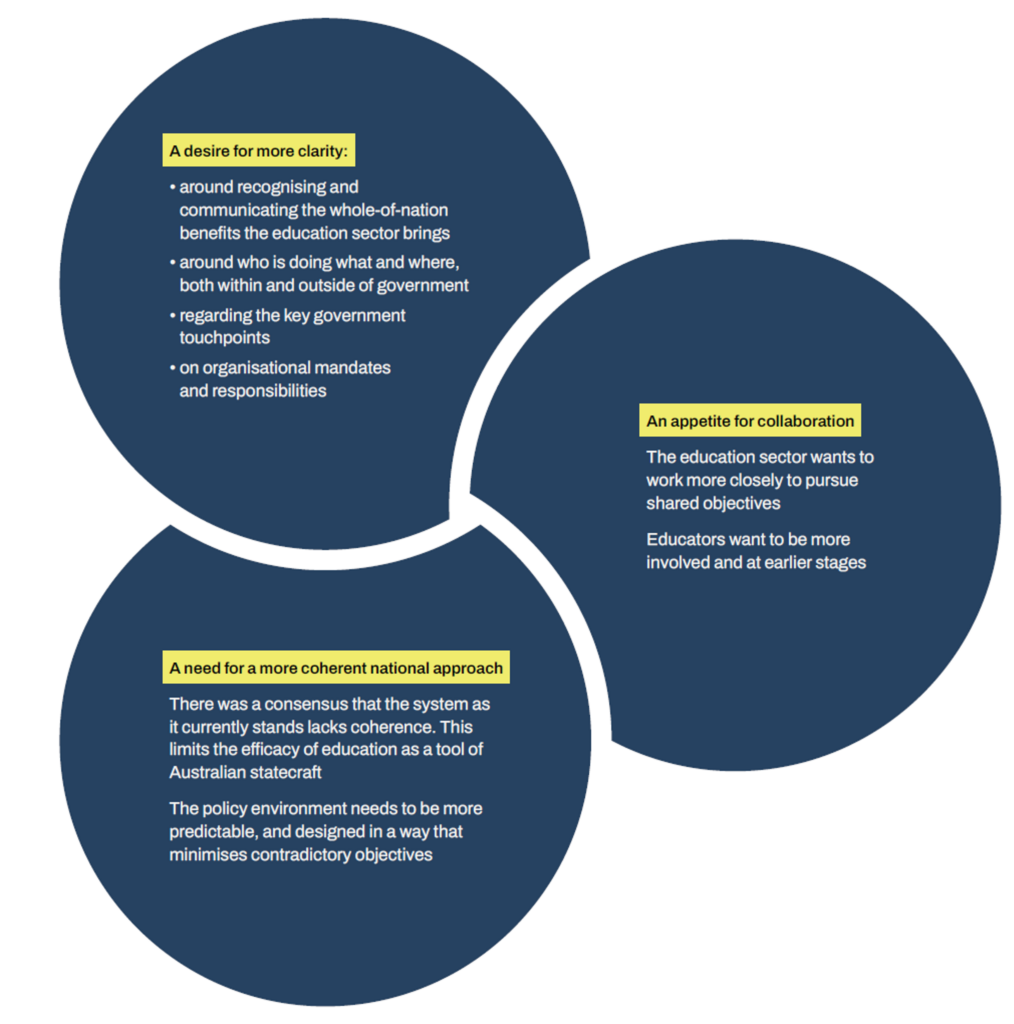
Recognising the good work that is already taking place, consultees considered that key to realising the full potential of education as a tool of statecraft is to knit it all together in a coherent framework. There was a sense that government doesn’t fully appreciate the extent to which education can enhance Australian statecraft across the board, and that it should engage more.
“Education can slip through the cracks in terms of its statecraft impact.”
“You’d think there would be more government support for education.”
“How education continues to be considered an add-on to our foreign policy, if it’s even mentioned, is beyond me.”
Mixed messaging from government was also identified as a factor that can limit the impact of education, while dissuading education stakeholders to fully buy in to the whole-of-nation concept. For example, some consultees noted how government’s praising of higher education’s soft power contribution on the one hand, yet its implementation of international student caps on the other, can undermine universities’ motivation to engage with the broader statecraft picture. Despite some frustrations over perceived policy inconsistencies, there is nevertheless a hunger for guidance and a more coherent approach.
“These things don’t just happen; it needs government guidance.”
“There’s that lack of understanding of what government’s all about in the university sector. They want to help, but don’t know how to partner.”
“Not having a joined-up goal in the region is undermining us.”
“Whole-of-nation acknowledges reality: our international engagement is broad. Education is something of a microcosm of this. There is so much going on.”
“Australian policymakers struggle for a systemic joined-up view of how the sector operates and how the impacts of policy are felt within the sector. The current government is trying for a joined-up approach. Having an assistant minister who really knows the sector is a great help.”
In addition to systemic reform, consultees wanted more involvement in the early stages of program design. They lamented that education experts were too often brought in at later stages, after critical decisions that would have benefitted from their expertise had already been made (often by those without deep education expertise). A more collaborative approach at the design stage would raise the ceiling for potential program efficacy and impact, and have positive flow on effects for Australian statecraft more broadly.
“We’re ready, willing and able to provide advice to government on policy design and contribute. We just need the systems in place to facilitate.”
“[W]e need to positively engage in creating a comprehensive program across the ecosystem, not a series of one-off policy announcements that last 12 months and leave gaping holes.”
“More than 2.5 million international students have studied in Australia in the past 50 years. Many foreign government and business leaders, including heads of state, ministers and CEOs, have studied in Australia and understand our institutions, values and perspective on the world. This is a significant asset for Australia. These former international students, together with Australians who have studied overseas, make up Australia’s global alumni community.”
— Foreign Policy White Paper, 2017

“[A]lthough there is often a temptation to focus on ‘big ticket’ initiatives as key tools of statecraft, such as development aid, infrastructure, or military assistance – smaller programs like the Australia Awards Scholarship warrants increased investment.”

“Positive experiences of student mobility and the development of intellectual, commercial and social relationships can build upon a nation’s reputation, and enhance the ability of that nation to participate in and influence regional or global outcomes. This is ultimately the essence of soft power.”
Opportunities
A World Class Sector
Australia has a clear comparative advantage in the education sector compared to many of its other tools of statecraft.
According to the latest data, Australia has the world’s 13th largest and 18th most competitive economy, the 18th strongest military and 15th largest defence expenditure, and sits 14th in Brand Finance’s Global Soft Power Index. These are respectable numbers given Australia is only the world’s 55th most populous country, and are reflective of its middle power status. Yet they also highlight the value of its world class education sector in comparison.
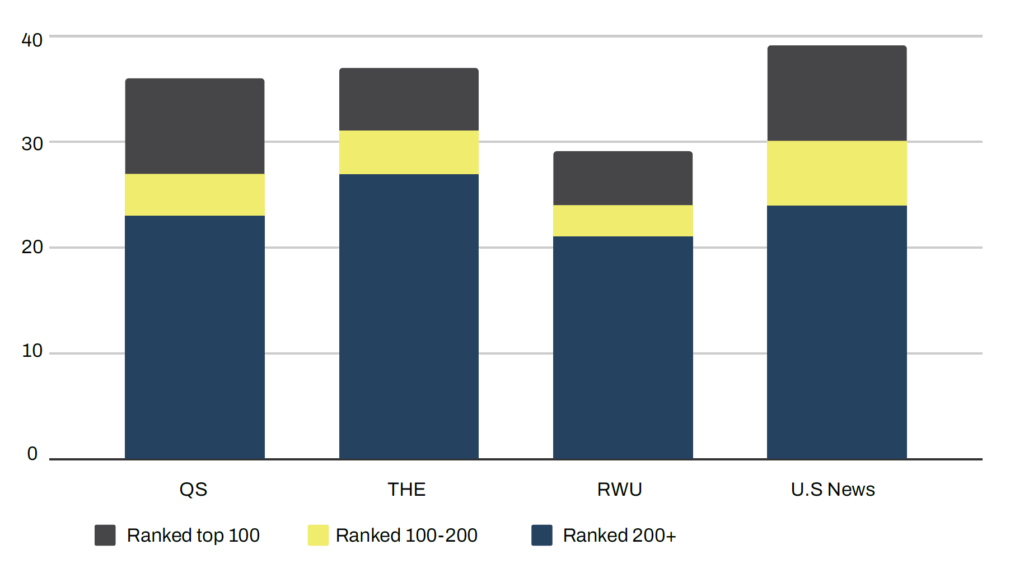
Depending on the ranking system, between 15-30% of all Australian universities sit within the top 100 globally. Australia is in the very rare position of being a top 10 country, both in terms of total number of top- 100 universities, as well as on a top-100 university per capita basis. The 2025 QS World University Rankings by Subject featured 13 Australian universities in the top 10 across 8 subjects, with Australia a top three country for the number of subject rankings per university.
Education is an asset that Australia can leverage as a world leader.
Australia in global university ranking systems
Growing Regional Demand
A mixture of favourable demographics, an expanding middle class, local supply-side constraints and favourable policy environments are fuelling a growing demand for international higher education in Asia, particularly Southeast Asia. The region ranks third for outward student mobility, behind only China and India. Asia overall accounts for 79% of global international student growth.
These trends are driving “educational re-regionalisation” in Asia, with intra-Asian student mobility becoming a defining feature. More than half of outbound students from Southeast Asia now prioritise destinations within Asia. While this realignment will pose challenges to traditional Western hubs like the US and UK, Australia’s proximate geography and positive reputation mean it is well-placed to capitalise on this growing demand.
Southeast Asian demand for Australian education
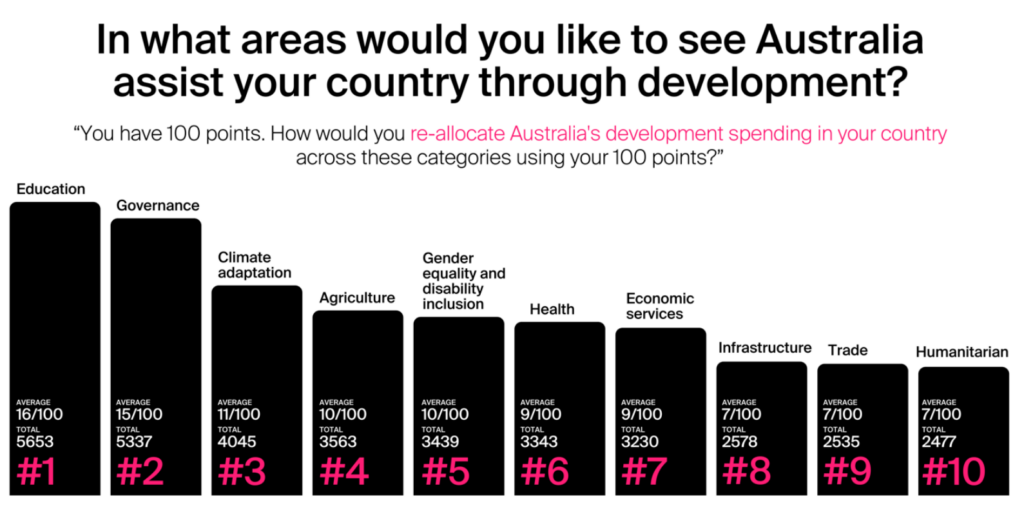
Development Intelligence Lab spoke with more than 360 Southeast Asian experts about what they wanted to see Australia’s development program focus on, with education being the most popular response. Australia has a comparative advantage in the education sector, and education is an indispensable asset to Australia’s development program. Two distinct things are in demand: support for education systems in Southeast Asia and access for Southeast Asians to Australia’s tertiary education system.
Maximising Soft Power
The value of academic exchange is immensely important for Australia. Outward mobility provides young Australians with the ability to operate comfortably in another country, to build transnational relationships, and bring these new capabilities back to various fields within Australia. These exchanges enhance Australia’s global knowledge and its global reach.
This is augmented by the inward flow of foreign students to Australia, and particularly the value of the Australia Awards scholarships. These scholarships build strong links and immense goodwill between Australia and the region’s emerging leaders across numerous fields.
International student alumni – who often attain senior positions in their home countries – are potential ambassadors for Australia. There is a soft power windfall to be maximised if international students have positive experiences, and if alumni networks are cultivated and tended.
Volatile Markets
There is opportunity to attract students, academics and researchers concerned by developments in the United States. Amid funding freezes, cuts and uncertainty over visa processing, scholars and international students already in the US are increasingly looking to leave, while prospective academics and students are weighing the benefits of working or studying in America against perceived risks.
International student enrolments have declined by 17% in 2025, the largest drop in a decade outside of the coronavirus pandemic; while analysis of the journal Nature’s career platform between January and March 2025 revealed a one-third increase in US scientists viewing and applying for jobs outside of the US compared to the previous year.
Universities in other countries have begun enticing those disillusioned through targeted campaigns, including in Europe and Canada.
“This act of American self-harm is our opportunity. And it’s an opportunity that has never arisen before and may never arise again… If we act decisively, Australia can be as, or more, attractive a destination for those researchers as Europe.”
Technology and Connectivity
Finally, there is significant scope to capitalise on the opportunities that 21st century technology and connectivity afford.
The ease with which schools and students can now connect across borders, for example, offers potential for hugely scalable pathways to strengthen Australian and international secondary school and student collaboration in a way that is deep and sustained, not just fleeting and superficial.
“There is now the possibility for radical step change in levels of international interaction through students and educational settings.”
“It’s so easy to do these days. It should just be a core part of school practice”.
Similarly, technology can be a catalyst for exchange, enabling movement in both directions. It is possible for schools unable to recruit language teachers to work with international partners on joint programs and for staff of a school or state education department in Australia to be based overseas.
“It can circulate regional knowledge back into the Australian school system. As well as introduce knowledge of Australia into the region.”
As well as building development expertise into education, and educational perspectives into the development program, this can also provide incentives for people to stay in education, helping address teacher shortages.
Mother International Institute of Education
Mother International Institute of Education (MIIED) is a global educational centre that provides online education empowerment program in local and international languages. Founded in 2022 in response to the closure of schools for Afghan girls, MIIED is largely run by Afghan academics in the global diaspora.
Teaching content in local and international languages, and utilising technology to connect educators with students, MIIED’s priority is to enable female students to resume and complete the courses that have been interrupted or discontinued in Afghanistan’s schools and universities.
ASEAN-Australia BRIDGE School Partnerships Program
The ASEAN-Australia BRIDGE Program is an initiative of the ASEAN-Australia Centre, implemented by Asialink Education at the University of Melbourne. The aim of the program is to strengthen intercultural relationships and educational collaboration between schools from nine ASEAN member states and Australia, fostering mutual understanding and collaboration. With an emphasis on people-to-people connections, the program provides opportunities for future leaders to learn about and engage with each other across the region, including through reciprocal visits.
Vision
What does it look like for Australia to see education as a tool of statecraft?
Recognising human capital is its primary asset, Australia acknowledges and respects the education sector for its essential role in building Australia’s sovereign capabilities. It is seen as imperative for maintaining – and enhancing – Australia’s global position.
As a starting point, Australia advances the genuine and holistic formation of young people to create individuals who are both good citizens, and good global citizens. These fundamental capabilities are augmented with the strong regional knowledge that the modern Australian requires, including how Australia’s neighbourhood connects to ordinary people’s lives.
Educators at all education levels are afforded status for their knowledge on culture and global affairs and key role in imparting it.
Australia takes its geography and diplomatic reach seriously, embedding language-learning and regional literacy within curricula. From language learning cultural knowledge also flows, and the regular and comfortable engagement throughout the region. Language learning is also about respect, powerfully demonstrating Australia’s commitment to its neighbourhood.
This underpins a broad understanding of education as a central pillar of how Australia engages with the world, with the sector’s full potential as a tool of statecraft realised through a coherent and coordinated whole-of-nation approach.
This is facilitated by relationships of trust that exist between education institutions and government, underpinned by predictable policy settings, consultation and collaboration.
Australia sees its education sector as a significant tool for regional development. Education capacity deficits in Southeast Asia and the Pacific are viewed as an opportunity for Australia to be innovative with education in the international development space.
“Nations that view education as a transaction may gain revenue. Those that view it as a public good will shape the future.”
Contributors
Thank you to those who have contributed their thoughts during the development of this paper. Views expressed cannot be attributed to any individuals or organisations involved in the process.
Adam Hegedus
Educating The Future Australia
Aliopio Baltazar
Mary MacKillop Today
Allan Behm
The Australia Institute
Amelia Barreto
MSI Timor-Leste
Anders Hofstee
Catalpa
Dr Angela Lehmann
Universities Australia
Anna Kirkham
The University of Sydney
Dr Annabel Dulhunty
Australian National University Crawford School of Public Policy
Antonia Farram
Strategic Development Group
Asha Puvan
Victor Chang Cardiac Research Institute
Bethany Keats
Innovative Research Universities
Bill Farmer AO
Former ambassador
Professor the Hon Bill Shorten
University of Canberra
Blaze Puksand
Asialink
Bridi Rice
Development Intelligence Lab
Professor Caitlin Byrne AM FAIIA
Griffith University
Professor Carolyn Evans FASSA
Griffith University
Ceinwyn Elleway
The University of Adelaide
Charles North
Global Partnership for Education
Professor Christoph Nedopil Wang
Griffith Asia Institute
Professor Christopher Ziguras
Centre for the Study of Higher Education, University of Melbourne
Cirilo Soares
Educating the Future
Dallas Dowsett
University of Queensland
Damien Miller FAIIA
Atlantic Fellows for Social Equity
Dan Skehan
Caritas
Dr Daniel Edwards
Australian Council for Educational Research
Professor Deborah Bateson
University of Sydney Faculty of Medicine and Health
Professor Dianne Stephens OAM
Charles Darwin University School of Medicine
Dominique Wiehahn
RMIT University
Edmund Misson
Organisation for Economic Co-operation and Development
Ellen Kirkpatrick
The Australasian Council of Deans of Arts, Social Sciences and Humanities
Dr Elly Kent
Australian National University
Emilie Hung-Ling He
University of Queensland
Fernando Pires
Caritas Timor-Leste
Professor the Hon Gareth Evans AC KC FASSA FAIIA
Former Minister for Foreign Affairs and Chancellor of ANU
Professor Ghulam Shah Adel
Mother International Institute of Education
Dr Greta Nabbs-Keller
University of Queensland
Héctor Salazar Salame
The Asia Foundation
Professor Jack Corbett
Monash University
Jack Hennessy
Monash Business School and The Fred Hollows Foundation
Professor Jacqueline Lo
Murdoch University Indo-Pacific Research Centre
Jacqui Savage
La Trobe University
Jane Martin
High school teacher
Jane Ryan
The Australasian Council of Deans of Arts, Social Sciences and Humanities
Dr Jane Sloane
Global Policy Initiative, UNSW Canberra
Jeaniene Spink
Australian Council for Educational Research
Professor Jennifer Westacott AC
University of Western Sydney
Jenny Dodd
TAFE Directors Australia
Jessica Mackenzie
Australian Council for International Development
Jessica Ronan
Universities Australia
Jie Rui Lin
Educating The Future Australia
Professor John Blaxland SFHEA FRSN FAIIA
Australian National University North America Liaison Office and Strategic and Defence Studies Centre
John Preston
Innovative Research Universities
Professor Emeritus John Ravenhill FASSA FAIIA
University of Waterloo
José Sabino Ximenes
Alola Foundation
Josephine Skellern
Skellern Family Foundation
Professor Joshua Francis
Menzies School of Health Research
Julianne Stewart
University of Canberra
Dr Julie Ballangarry
Charles Sturt University
Professor Kent Anderson
Australian Technology Network
Kishore Mahbubani PPA
National University of Singapore
Leontine Baars-Scotney
Edith Cowan University
Lori Hocking
University of Adelaide
Luke Sheehy
Universities Australia
Dr Lynda-ann Blanchard
University of Sydney Southeast Asia Centre and Australian Council for Human Rights
Dr Malcolm Beazley AM
Australian National Museum of Education, University of Canberra
Maria Guterres
Alola Foundation
Mariano Pereira
Catholic Relief Services Timor-Leste
Martin Elms
Regional Universities Network
Professor Martin Krygier
UNSW
Mary-Ann Nicholas
Burnet Institute
Professor Matthew Clarke
Deakin University
Dr Matthew French
Research for Development Impact Network
Matthew Maury
Australian Council for International Development
Dr Matthew Readette
Queensland University of Technology
Meghal Shah
Action on Poverty
Michael Brennan
University of Queensland
Michael Collins
Strategic Development Group
Professor Michael Wesley FAIIA
University of Melbourne
Milalin Javellana DPM
Australia Awards Philippines
Mira Sulistiyanto
Development Intelligence Lab
Dr Merriden Varrall
Australia Geopolitics Hub at KPMG
Nicole Dobrohotoff
Caritas Australia
Ornella Byak
BETTER Timor
Patricia Garcia AO
Institute for Economics & Peace
Paul Harris
Innovative Research Universities
Peter Goodfellow
CARE Timor-Leste
Philip Ivanovp
Geopolitical Risks and Strategy Practice
Rebecca Hall GAICD
Former Queensland Department of Education
Professor Rebecca Strating FAIIA
La Trobe Centre for Global Security
Riley Everett
Australian National Internships Program
Rohan Martyres
Menzies Leadership Foundation
Rohan Titus
ANU National Security College
Ronit Prawer
Australian Academy of Science
Dr Sally Nimon
Group of Eight
Santino Frenky De Araujo
Educating the Future
Dr Sarah Richardson
Asialink Education
Sarah Xu
Dairy Australia
Dr Siew Fang Law
Bento Box of Care and former Centre for the Study of Higher Education
Professor Simon Evans FAAL
University of New England
Susannah Patton
Lowy Institute
Dr Teressa Schmidt
TAFE Directors Australia
Professor Toni Erskine
Australian National University Coral Bell School
Professor Wanning Sun
University of Technology Sydney
Professor Wei Xiang
La Trobe University
Yung Nietschke
Asialink Education and former Australian Council for Educational Research
Dr Zara Maxwell-Smith
UNSW Canberra
AP4D also consulted individuals from the Department of Foreign Affairs and Trade, the Department of Education and the Australian Defence Force.
Editors
This work is licensed under a Creative Commons license. You can reprint or republish with attribution.
You can cite this paper as: Asia-Pacific Development, Diplomacy & Defence Dialogue, What does it look like for Australia to see education as a tool of statecraft (Canberra 2026): www.asiapacific4d.com.
Photo on this page: ‘Student in yellow PPE talking to classmate, smiling through their mask‘ by University of Melbourne, used with permission.

This publication has been funded by the Australian Government through the Department of Foreign Affairs and Trade. The views expressed in this publication are the author’s alone and are not necessarily the views of the Australian Government.
